Ireland with Kids: A Family Itinerary
Ireland with kids is one of those rare holidays that works for every member of the family simultaneously. Adults get ancient castles, dramatic coastline, and proper pints of Guinness; children get rolling green hills, rock pools, farm animals, and the genuine possibility of meeting someone who claims their uncle once spotted a fairy. This itinerary is built around real places and real logistics — not glossy brochure promises — so you can plan a trip that runs smoothly even with a car full of under-twelves.
Day 1–2: Dublin — Ease In Before You Drive
Start in the capital. Dublin rewards a couple of days before you attempt the left-hand driving. Chester Beatty Library on Dublin Castle grounds is free and genuinely fascinating for older children. The Natural History Museum (also free) has a Victorian cabinet-of-curiosities feel that tends to captivate kids far more than a modern science centre. Phoenix Park is enormous — Europe’s largest city park — and home to a herd of fallow deer you can walk right up to.
Book accommodation close to the city centre so you can walk everywhere and avoid the car until you are ready. Self-catering apartments in Dublin are often better value than hotels for families and give you kitchen access for early breakfasts and packed lunches.
For planning how long to spend in the city vs. the countryside, our 7-day Ireland itinerary and 10-day Ireland itinerary both lay out realistic timings.
Day 3–4: County Wicklow — Mountains and Monastic Ruins
An hour south of Dublin, Wicklow is the ideal soft landing for families moving out of the city. Powerscourt Estate has formal gardens children can run through without anyone minding, plus a waterfall walk that satisfies the “I want to climb something” instinct. Glendalough — a sixth-century monastic settlement in a glacial valley — is spectacular and free to enter the grounds. The round tower alone tends to generate a lot of “did real monks live in there?” conversation.
County Wicklow accommodation ranges from farmhouse B&Bs to self-catering cottages within walking distance of the valley trails.
Day 5–6: County Clare — Cliffs and Burren Limestone
The Cliffs of Moher are unmissable, but go early — by 11am the car park is heaving in summer. The Burren is equally impressive and far less crowded: the limestone pavement landscape looks like another planet, children tend to love scrambling across it, and the wildflowers between April and June are extraordinary.
Doolin village is a practical base — small, walkable, with a ferry pier for boat trips to see the cliffs from the sea (strongly recommended with kids who have sea legs). Lahinch and Kilkee are nearby beach options if you need a straightforward sand-and-waves day.
County Clare accommodation includes a good selection of family cottages in Clare that sleep six comfortably.
Day 7–8: County Kerry — Ring of Kerry Without the Coach Tour Rush
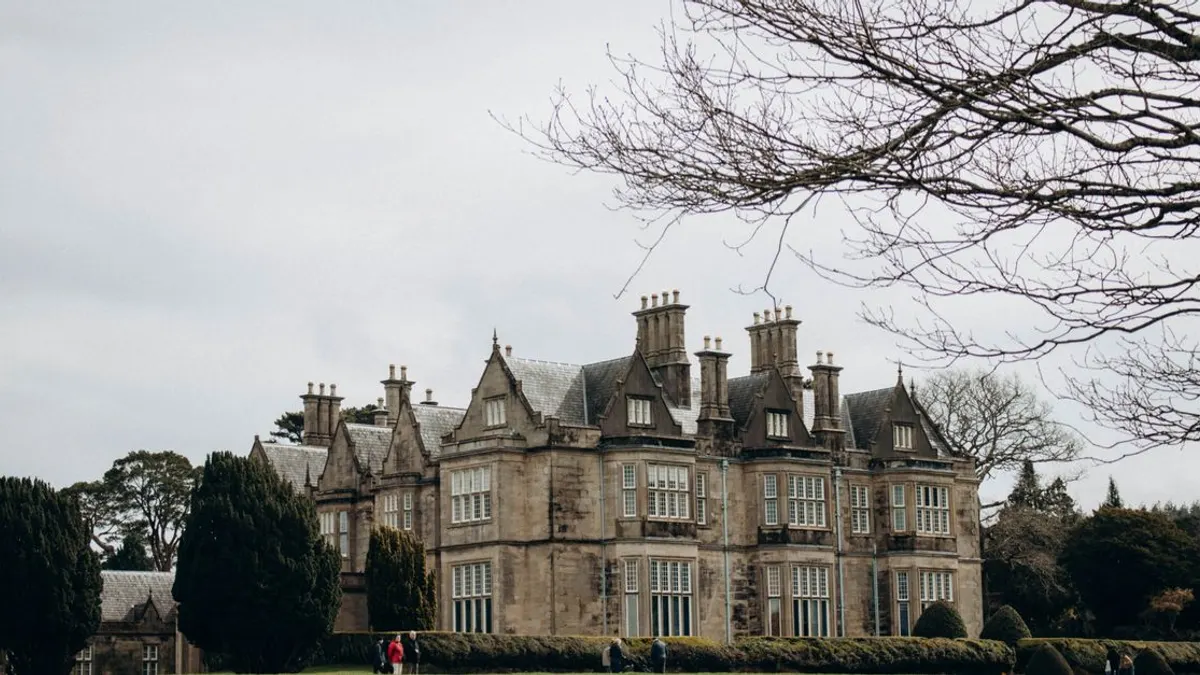
The Ring of Kerry is best driven anti-clockwise (most coach tours go clockwise, so you avoid the worst of the traffic). Kenmare is the most relaxed town on the route and makes an excellent overnight stop. Children tend to respond well to Muckross House and its traditional farms at Killarney National Park — there are working demonstrations of butter-churning and thatching that hold attention surprisingly well.
Kerry also has some of Ireland’s best beaches: Inch Strand is vast and backed by dunes; Derrynane is sheltered and ideal for smaller children. County Kerry accommodation is well developed for families, and self-catering cottages in Kerry give you the flexibility of coming back muddy from a beach walk without worrying about hotel carpets.
Day 9–10: Connemara — Wild Coast and Pony Trekking
Connemara is the landscape most people picture when they think of Ireland — bog, granite, archipelago coastline, and Connemara ponies in actual fields. Clifden is the main town and a good base. Kylemore Abbey, a Gothic castle on a lakeside, is one of the most child-friendly heritage sites in the country: the Victorian walled garden is large enough to lose an afternoon in, and the café does decent scones.
Pony trekking is available at several farms around the region — booking ahead in July and August is essential. Connemara accommodation includes characterful cottages in Connemara suited to families who want space and quiet after a day outdoors.
Where to Stay: Accommodation Tips for Families
For a family road trip, self-catering cottages are almost always the right choice. You control meal times, nap times, and laundry — all of which matter enormously once you are on day eight of a road trip. Glamping in Ireland is an increasingly popular option for families with children old enough to appreciate it: geodesic domes and bell tents with proper beds and heating are available across Connacht and Munster.
If you prefer hotels, look for those with pools and family rooms rather than interconnecting rooms, which are rarely as soundproofed as advertised. Hotels in Ireland vary enormously by region — our full accommodation guide covers the options by type.
We may earn a commission from bookings, at no extra cost to you.
When to Book
Summer (June–August) is peak season for family travel and the best time for reliable beach weather. Book accommodation at least three months in advance for July and August, particularly in Kerry, Clare, and Connemara. Demand for searches and planning spikes in January–March, so availability can tighten quickly even for the following summer.
May and early September are excellent alternatives: school-holiday crowds thin noticeably, prices drop, and the weather is broadly similar. For a full breakdown, see our best time to visit Ireland guide.
Practical Notes
Driving is by far the most practical way to see Ireland with children — driving in Ireland covers the left-hand rule, narrow roads, and what to expect on rural lanes. A car with a full-size boot is worth paying extra for. For ferry crossings from France or the UK, see getting to Ireland.
A travel insurance policy that covers children is non-negotiable. Our travel insurance and car hire guide lists the key things to check before you travel, including excess waivers and activity cover.
FAQ
Is Ireland a good destination for young children under five? Yes, with realistic expectations. The landscape is accessible, Irish people are genuinely warm towards children in restaurants and pubs (lunch only for under-18s), and most heritage sites have buggy-friendly paths. Self-catering accommodation makes nap schedules and early dinners far easier to manage.
What is the best region in Ireland for a family holiday? County Kerry and County Clare are the most consistently rewarding for families: strong infrastructure, a mix of beaches and landmarks, and a wide range of family accommodation. Connemara is slightly wilder and better suited to children aged seven and above who are comfortable with longer drives between stops.
Do I need to book activities in advance in Ireland? For popular sites in summer — Cliffs of Moher, Kylemore Abbey, pony trekking — yes. Book online at least a week ahead in July and August. For most beaches, national parks, and village walks, you simply turn up.
Related: 7-Day Ireland Itinerary · Best Beaches in Ireland · Self-Catering Ireland