Glamping in Ireland
Glamping in Ireland has quietly grown from a niche novelty into one of the most compelling ways to experience the country. Swap damp tent pegs for a heated geodesic dome overlooking Clew Bay, or trade a cramped caravan for a timber treehouse buried in a Wicklow oak wood — the island has terrain wild enough to make outdoor sleeping genuinely dramatic, yet enough creature comforts to keep even reluctant campers happy.
What Makes Glamping in Ireland Different
Ireland’s unpredictable weather — the same Atlantic fronts that paint the landscape emerald — is precisely why the glamping sector has evolved so thoughtfully here. Operators know guests need solid insulation, wood-burning stoves, and blackout curtains that can handle a summer sunrise at 4:30 am. The result is a collection of sites that feel more like boutique retreats than camping grounds.
Most glamping units sleep two to six people and include a kitchenette or private bathroom, distinguishing them clearly from hostel or B&B stays. If you want to compare the full range of options, browse our guide to Types of Accommodation in Ireland.
Best Regions for Glamping in Ireland
The Wild Atlantic Way
The western seaboard is the obvious heartland. Clifftop pods in County Clare with views across the Aran Islands, domes perched above Killary Fjord in Connemara, and geodesic spheres in Connemara’s bogland all sit within an hour’s drive of each other. The landscape is raw and the night skies — away from city light pollution — are exceptional.
For coastal glamping in the north-west, County Donegal offers sites near Slieve League and Glenveagh that draw couples and solo walkers alike. Our Donegal Accommodation guide covers the broader area if you plan to extend your trip.
The Wild Atlantic Way stretches 2,500 km, so anchor your glamping stay to one section rather than trying to move every night.
County Kerry
Kerry’s combination of mountain and sea views makes it a strong glamping destination. Sites in the Dingle Peninsula and near Killarney National Park are particularly popular — some positioned so you wake up facing MacGillycuddy’s Reeks. See our County Kerry accommodation hub for context on the wider area.
County Wicklow
For those arriving into Dublin and wanting to glamour-camp without a long drive, County Wicklow delivers. The Wicklow Mountains National Park sits just 45 minutes south of the capital, and there are several well-run glamping operations in the valleys around Glendalough and Avoca. Our County Wicklow accommodation page lists complementary options nearby.
Types of Glamping Unit to Know
Geodesic domes are the most photogenic option — round, transparent panels in the roof allow stargazing without leaving your bed. Popular across Kerry and Galway.
Shepherd’s huts are compact, insulated cast-iron-wheeled huts, often positioned in farm settings with pastoral views. Many include a fold-out double bed, a small wood burner, and a private outdoor hot tub.
Treehouses tend to be the most expensive tier — elevated timber platforms with full bathrooms, and sometimes a rope bridge or wraparound deck. Wicklow and Leitrim have some strong examples.
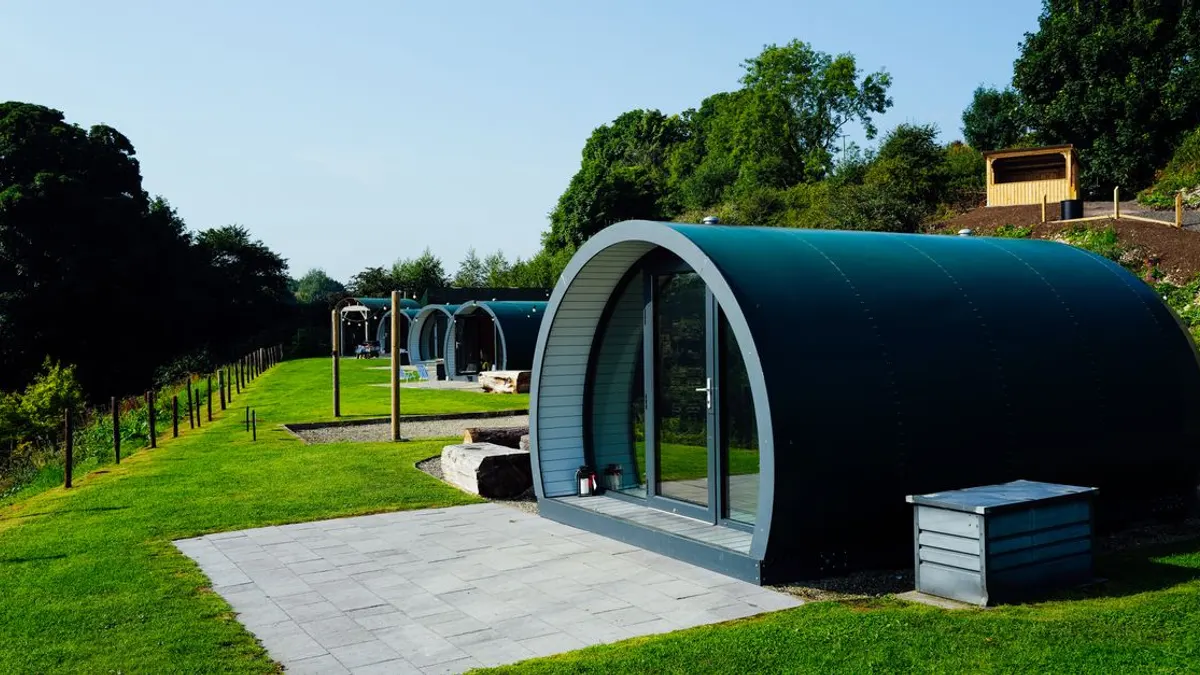
Glamping pods are the entry-level format: fibreglass or timber shells, usually with electricity and heating, often sharing a shower block. Good value for families or those who don’t need total luxury.
Bell tents — large canvas tipis on wooden platforms — are the most seasonal option, typically available May to September only.
What to Expect on Arrival
Arrival times at Irish glamping sites are typically 3 pm to 4 pm, and departure by 10 am — tighter than hotels because hosts need time to deep-clean and re-stock. Most sites provide firewood, bedding, and basic kitchen supplies (oil, salt, tea bags). Confirm in advance whether towels are included, as this varies.
Mobile coverage can be patchy in remote coastal settings. Download offline maps (Maps.ie or Google Maps offline) before you leave. Our eSIM guide for Ireland can help you maintain a data connection even in the more rural western sites.
Many glamping sites in Ireland are adults-only. If you are travelling with children, filter specifically for family-friendly operations — our family-friendly accommodation guide has relevant alternatives.
Practical Booking Tips
- Book early for peak season. Premium domes and treehouses sell out months in advance for July and August. Shoulder months — May, June, and September — offer better value and often better weather for photography.
- Minimum stays are common. Two-night minimums apply at most sites on weekends; three nights over bank holidays.
- Pet policies vary widely. Some sites welcome dogs in outdoor units; others prohibit pets entirely. Check before booking. Our pet-friendly cottages guide is a useful fallback if glamping options are full.
- Parking is almost always on-site and free, unlike urban hotels. A hire car is strongly recommended for rural sites — read our driving in Ireland guide if you are unfamiliar with left-hand traffic or rural roads.
When to Book
Demand for glamping in Ireland peaks between January and March as people plan summer holidays. The best domes, treehouses, and coastal pods for July and August are often fully booked by February. If you have a specific site in mind — particularly on the Wild Atlantic Way or in Kerry — book as soon as your dates are fixed. Autumn bookings (October) can often be made with much shorter lead times and at reduced rates.
We may earn a commission from bookings made through links on this page, at no extra cost to you.
FAQ
Is glamping in Ireland expensive? Prices vary significantly by unit type and location. Shepherd’s huts and pods typically range from €90 to €160 per night; treehouses and premium domes often start at €180 and can exceed €300 per night in peak season. Most prices include bedding and basic firewood.
Do I need to bring my own food to a glamping site in Ireland? Most units include a basic kitchenette (hob, microwave, mini-fridge), but you will need to bring your own groceries. Sites in remote areas are often a 20–30 minute drive from the nearest supermarket, so stock up before arrival. Some operators offer optional breakfast hampers for an extra charge.
Can I go glamping in Ireland in winter? A growing number of sites — especially those with domes and shepherd’s huts fitted with wood-burning stoves — operate year-round. Winter glamping in Ireland has a genuine appeal: fewer crowds, dramatic skies, and the possibility of seeing the Northern Lights from northern sites in Donegal. Confirm heating capacity with the operator before booking in November through February.
Related: Accommodation on the Wild Atlantic Way · Where to Stay in County Kerry · Self-Catering in Ireland