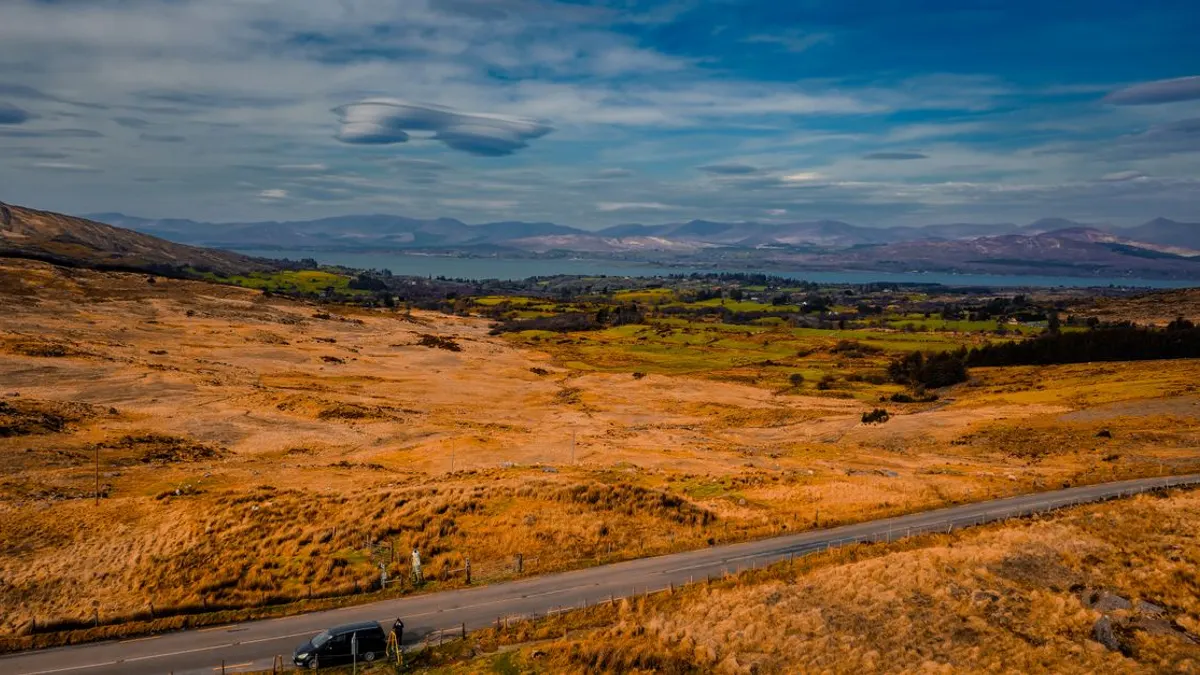
Driving in Ireland: A First-Timer’s Guide
Ireland rewards drivers like few other destinations. The moment you leave a city behind, the roads narrow, the hedgerows close in, and a view of the Atlantic or a ruined tower appears without warning. But driving in Ireland also comes with a few genuine surprises — and knowing them in advance makes all the difference.
Left-Hand Traffic: The First Hurdle
If you come from a country that drives on the right, the adjustment to left-hand traffic is the single biggest challenge. The steering wheel is on the right-hand side of the car, the driver sits closest to the centre of the road, and roundabouts go clockwise. Most visitors adapt within half a day, but the first 30 minutes — especially leaving an airport car park — require full concentration.
Practical tips:
- Repeat “keep left” out loud every time you pull away from a junction or car park.
- Book an automatic transmission if you are not used to changing gear with your left hand.
- Avoid collecting your hire car after a long overnight flight; fatigue and unfamiliar road rules are a poor combination.
See our guide to getting to Ireland for ferry routes that let you arrive rested with your own car.
Road Types and Speeds
Ireland uses three categories of road, each with a distinct character:
Motorways (M roads)
Fast, well-lit, and straightforward. The M50 rings Dublin and connects to the M1 (Belfast), M4 (Galway), and M7 (Limerick/Kerry). Speed limit: 120 km/h.
National Roads (N roads)
The backbone of the network. The N11 runs to Wexford, the N25 hugs the south coast, and the N71 is the route through west Cork. Speed limit: 100 km/h on dual carriageways, 80 km/h on single-lane sections.
Regional and Local Roads (R and L roads)
These are the roads Ireland is famous for: one lane wide, passing places every few hundred metres, grass growing along the centre stripe. Most routes along the Wild Atlantic Way and through Connemara fall into this category. Speed limit: 80 km/h, but you will rarely exceed 40 km/h comfortably. Slow down, pull into passing places promptly, and wave — it is expected.
Fuel, Tolls, and Practical Costs
Petrol and diesel are widely available in towns throughout the Republic of Ireland and Northern Ireland. In very remote areas — parts of County Mayo or the Donegal peninsulas — stations can be 30–40 km apart, so keep the tank above a quarter when exploring rural roads.
Tolls exist on several routes, most notably:
- M50 Dublin Ring Road (barrier-free; pay online at eflow.ie within 24 hours)
- M1 (Dublin–Drogheda), M4, M7, M8 corridors
- Toll booths on some N roads (cash or card accepted)
Northern Ireland has no road tolls.
Parking in Dublin and Cork city centres uses pay-and-display machines or multi-storey car parks. Outside cities, parking is generally free and plentiful — a real advantage when you stay in smaller towns like Killarney, Westport, or Kinsale.
The Republic and Northern Ireland: Two Countries, One Island
Crossing the border between the Republic of Ireland and Northern Ireland is seamless — no passport check, no customs stop — but there are differences to keep in mind:
- Currency: Euro in the Republic; Pound Sterling in Northern Ireland.
- Speed signs: km/h in the Republic; mph in Northern Ireland. The visual change from green signs to blue is your cue.
- Car hire: Check your rental agreement. Some companies restrict vehicles to the Republic; others include all-Ireland coverage. If you plan to visit Belfast or the Causeway Coast, confirm cross-border permission when booking.
- Fuel: Diesel and petrol are sold in litres on both sides; prices vary with currency fluctuations.
The Best Scenic Drives
Driving in Ireland is, for many visitors, the attraction in itself. A few routes stand out:
Ring of Kerry — A 179 km loop around the Iveragh Peninsula in County Kerry, passing Killarney, Cahersiveen, Waterville, and Sneem. Drive it anticlockwise to stay on the outside of the road with sea views. See our full guide to driving the Ring of Kerry.
Wild Atlantic Way — A 2,500 km signed route from Donegal in the north to Cork in the south. You can dip in anywhere; the Dingle Peninsula, the Cliffs of Moher near Doolin, and the Aran Islands ferry connections are highlights.
Wicklow Mountains — Just 40 minutes from Dublin, the R115 Military Road through the Sally Gap offers moorland scenery and almost no traffic. Ideal if you are based in County Wicklow or doing a Dublin day trip.
For a structured plan combining several of these, the ultimate Ireland road trip itinerary covers a two-week loop with accommodation suggestions at each stop.
Car Hire Tips
Book early, particularly for summer and bank holiday weekends. Insurance is the area where costs can escalate: the mandatory Collision Damage Waiver offered by hire companies sometimes carries a high excess. Consider a standalone car hire excess policy through your travel insurance — see our travel insurance and car hire guide for a comparison of options relevant to visitors to Ireland.
Most hire cars in Ireland are manual transmission by default. Automatics are available but must be reserved in advance.
We may earn a commission from bookings made through links on this page, at no extra cost to you.
When to Book
Demand for accommodation and car hire in Ireland peaks between June and August. If you are planning a summer road trip, book your hire car and accommodation between January and March to secure the best rates and vehicle choice — especially for automatics and larger people carriers. Ferries from France and the UK also fill quickly for July crossings.
FAQ
Do I need an International Driving Permit to drive in Ireland? Citizens of EU countries can drive using their standard EU licence. Visitors from most other countries, including the US, Canada, and Australia, can drive on their national licence for up to 12 months. An International Driving Permit is recommended if your licence is not in Roman script.
Which side of the road do they drive on in Ireland? Ireland drives on the left, the same as the UK, Japan, and Australia. The steering wheel is on the right-hand side of the vehicle. This applies to both the Republic of Ireland and Northern Ireland.
Can I use my hire car in both the Republic and Northern Ireland? Many hire companies allow cross-border travel, but not all. You must confirm this when booking; some policies require an extra all-Ireland coverage fee. Driving across the border without permission could void your insurance entirely.
Related: