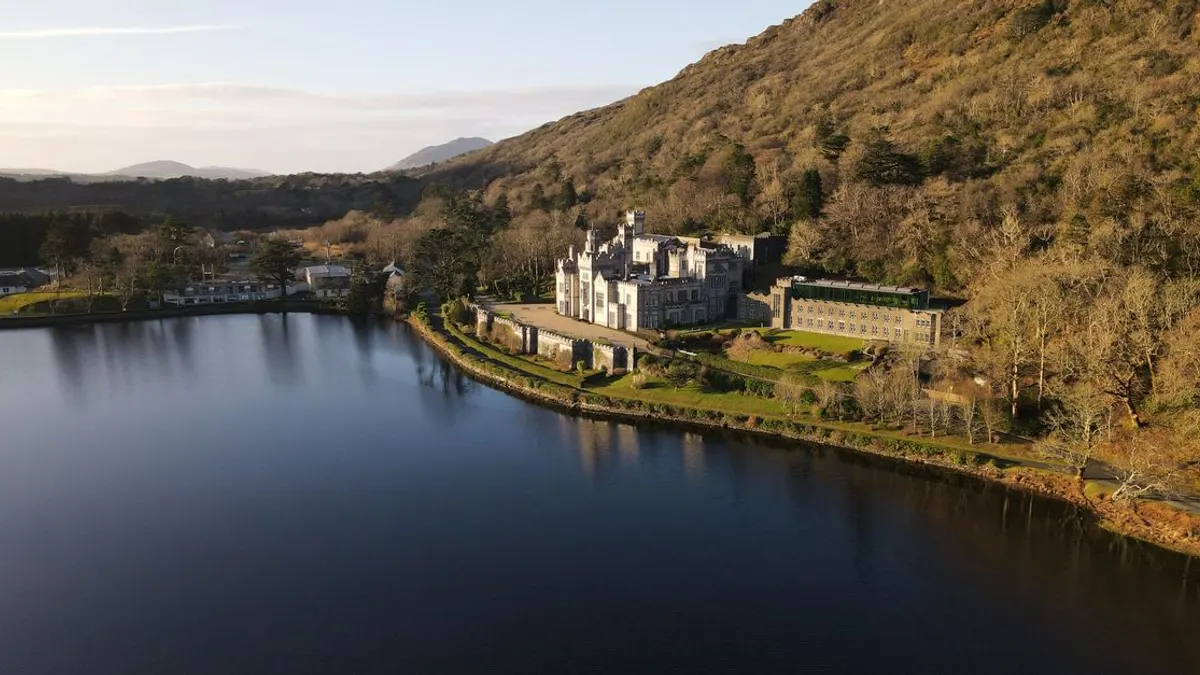
Irish Castles to Visit
Ireland has more castles per square mile than almost anywhere in Europe. From squat Norman tower houses rising out of bog-land to grand Elizabethan fortresses and Victorian Gothic revivals, irish castles span nearly a thousand years of conquest, resistance and aristocratic ambition. Some are carefully restored and open daily; others are atmospheric ruins you can wander freely. Here are the ones genuinely worth building a trip around.
Blarney Castle, County Cork
Blarney is the most visited castle in Ireland, and with good reason. The 15th-century tower house southwest of Cork city holds the famous Blarney Stone, set into the battlements at the top. To kiss it you lean backwards over a drop — it’s more dramatic than it sounds. Beyond the stone, the castle grounds are exceptional: the Poison Garden, the Witch’s Kitchen rock formation and the woodland walk along the Martín River are all included in the admission fee.
The village of Blarney itself is compact and walkable. If you plan to base yourself nearby, Where to Stay in Cork covers the full spread from city-centre hotels to rural B&Bs within easy reach.
Kilkenny Castle
Kilkenny Castle stands at the southern end of the city’s medieval mile, above the River Nore. It was built by the Normans in the 12th century and occupied continuously until 1935, which means successive owners left their mark in ways that most pure ruins cannot show. The long picture gallery on the upper floor, hung with portraits of the Butler dynasty, is particularly striking.
Kilkenny is one of Ireland’s most compact medieval cities — the castle, St Canice’s Cathedral and the Black Abbey are all walkable from one another. See Where to Stay in Kilkenny for accommodation options from boutique townhouse hotels to traditional guesthouses.
Rock of Cashel, County Tipperary
The Rock of Cashel is technically an ecclesiastical site — Cormac’s Chapel on the summit is a Romanesque gem — but the fortified enclosure, round tower and high crosses make it feel unmistakably castle-like. It rises sharply from the Tipperary plain, visible for miles in every direction, and the light on the limestone changes hour by hour.
The Rock sits on the Ireland’s Ancient East trail, which strings together some of the island’s most significant heritage sites. If you’re driving through Tipperary on a road trip, it rewards a half-day stop rather than a quick photo.
Bunratty Castle, County Clare
Bunratty near Limerick is one of the best-preserved tower houses in Ireland. The interior has been filled with medieval furniture and tapestries, giving a genuine sense of how a 15th-century lord would have lived. It sits inside the larger Bunratty Folk Park, which recreates a 19th-century Irish village and is particularly good for families.
The castle is on the road from Shannon Airport to Galway, making it a natural first or last stop on a west-coast itinerary. For accommodation in the county, Where to Stay in County Clare has options at every price point.
Dunluce Castle, County Antrim
Dunluce occupies one of the most dramatic settings of any castle in Europe: a basalt stack on the north Antrim coast, connected to the mainland by a narrow bridge, the Atlantic crashing below on three sides. Large sections have fallen into the sea over the centuries, which only adds to the effect.
It sits on the Causeway Coast between Ballycastle and Portrush, close to the Giant’s Causeway. If you’re combining both sites, Where to Stay on the Causeway Coast covers the villages along this stretch of Northern Ireland’s shoreline.
Trim Castle, County Meath
Trim is the largest Anglo-Norman castle in Ireland and genuinely undervisited. The keep is one of the most imposing in the country — a cross-shaped tower house with walls up to three metres thick. Guided tours of the interior are the only way to see it properly and run through the full medieval history of the site.
Trim is about an hour from Dublin, easily combined with a visit to the Hill of Tara or Newgrange as part of an Ireland’s Ancient East day trip.
Castles You Can Actually Sleep In
Visiting is one thing; staying overnight is something else. Several irish castles have been converted into hotels, from the full Gothic grandeur of Ashford Castle in County Mayo to smaller tower houses let as self-catering properties. If a castle stay is on your list, Castles You Can Stay In is a practical guide to what is available, at what price, and what the experience is actually like.
For a wider look at unusual places to sleep across the island, Types of Accommodation in Ireland covers everything from glamping pods to luxury lodges.
We may earn a commission from bookings made through links on this page, at no extra cost to you.
When to Book
Summer (June to August) is peak season for castle visits: queues at Blarney and Bunratty can be long by mid-morning, and accommodation near popular sites books out fast. If you want July or August dates at a castle hotel — particularly Ashford Castle or Dromoland — book at least six months ahead. January to March is the window when most summer availability opens. Shoulder season (April–May and September–October) offers shorter queues, lower prices and often better light for photography.
FAQ
Are irish castles worth visiting even if they are in ruins? Yes — many of the most atmospheric sites in Ireland are ruins. The Rock of Cashel, Dunluce Castle and numerous smaller tower houses along the Wild Atlantic Way are all roofless or partially collapsed, yet the history, landscape and scale make them genuinely compelling.
Do I need to book tickets for irish castles in advance? For the most popular sites — Blarney, Kilkenny, Bunratty and the Rock of Cashel — buying tickets online in advance is strongly recommended in summer. Smaller or less-visited castles like Trim often require no advance booking.
Can I stay overnight inside a castle in Ireland? Yes. Several historic castles have been converted into hotels or self-catering properties, including Ashford Castle in County Mayo and Dromoland Castle in County Clare. See Castles You Can Stay In for a full overview.
Related: Ireland’s Ancient East: Where to Stay · Where to Stay on the Causeway Coast · The Ultimate Ireland Road Trip Itinerary