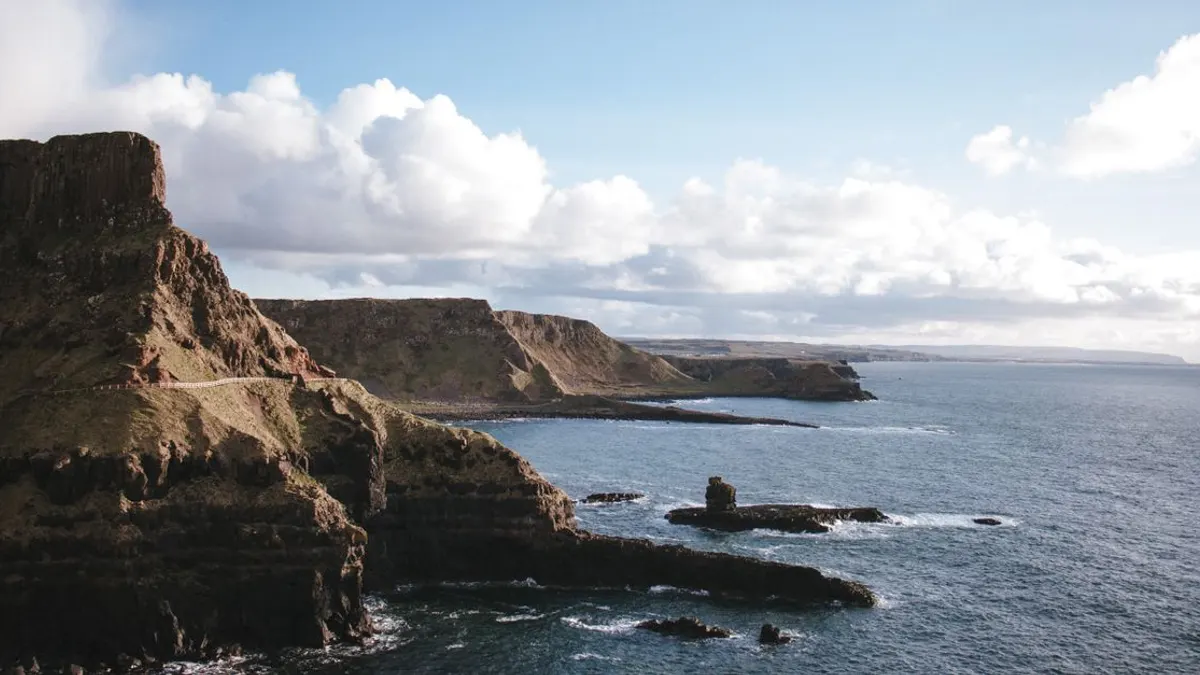
The Ultimate Ireland Road Trip Itinerary
Ireland rewards drivers like almost nowhere else in Europe. Narrow roads hug cliff edges, brown tourist signs point to castles you had no idea existed, and a sheep blocking the lane feels less like an obstacle and more like part of the plan. This ireland road trip itinerary gives you a realistic backbone — distances, overnight stops, and honest accommodation advice — that you can stretch to ten days or compress to a long week.
Before You Leave: Essentials
Hire a car at Dublin Airport and collect it before driving into the city centre — it saves an hour and a headache. Left-hand traffic is the biggest adjustment; the width of Irish lanes is the second. Read our Driving in Ireland: A First-Timer’s Guide before you go, and sort travel insurance early — our guide to car hire and travel insurance for Ireland covers the main options side by side.
Wild Atlantic Way signage (a blue wave on a yellow background) is consistent and reliable. Download the offline map before you lose signal in Connemara.
Day 1–2: Dublin — Pick Your Starting Point
Most road trips begin in Dublin, so allow yourself a full first evening to absorb the city rather than drive straight out. The Liberties and Portobello are good value bases south of the Liffey; Drumcondra suits early morning airport departures. Full area breakdowns are in our Where to Stay in Dublin guide.
On day two, head south through County Wicklow. The Military Road crosses the Wicklow Mountains and delivers you to Glendalough — two early-Christian monastic ruins beside a lake — in under an hour from Dublin. County Wicklow accommodation is excellent for a first night outside the capital: small market towns, good gastropubs, easy driving.
Day 3: Kilkenny and the Ancient East
From Wicklow, cut inland to Kilkenny. The medieval city repays a slow morning: Kilkenny Castle, the Black Abbey, and the Design Centre in the old Butterslip alley. Stay one night here and explore the lanes. Where to Stay in Kilkenny lists guesthouses within walking distance of everything. The broader swathe of passage tombs, Norman keeps, and monastic sites nearby is covered in our Ireland’s Ancient East guide.
Side Trip: Kinsale (South Cork)
If you have a spare half-day driving south, Kinsale is one of Ireland’s prettiest harbour towns and has a strong food scene that punches well above its size.
Day 4: Cork City
Cork is Ireland’s second city and deserves more than a flythrough. The English Market is a Victorian food hall that has been trading since 1788 — a working market, not a tourist set. Leeside pubs stay open late and the live music is genuinely impromptu. Plan at least one night: Where to Stay in Cork covers the best neighbourhoods for walkers and drivers alike.
Day 5–6: The Ring of Kerry and County Kerry
Leave Cork early and drive west to Killarney — the gateway to the Ring of Kerry. The ring itself is a 179 km circuit of the Iveragh Peninsula: mountain passes, stone forts, and a coastline that changes colour with the light. Drive it anticlockwise to avoid tour-bus bottlenecks, and leave time for the Gap of Dunloe off the main loop.
Where to Stay in Killarney covers everything from castle hotels to hostel dorms. For a quieter base, Kenmare at the mouth of the Kenmare River is an excellent alternative. Full regional picks are in Where to Stay in County Kerry.
We may earn a commission from bookings, at no extra cost to you.
Day 7: The Cliffs of Moher and County Clare
Cross the Shannon by ferry from Tarbert to Killimer — it cuts 85 km off the drive north and is one of the more satisfying short crossings in Ireland. You arrive directly in County Clare, with the Cliffs of Moher an hour’s drive north.
The cliffs run for 14 km and reach 214 metres at their highest point. Visit early morning or late afternoon to avoid the largest tour groups. Doolin, a small village 7 km north of the cliffs, is the classic base: traditional music sessions happen most nights in Fischer’s and McDermott’s. Full County Clare options are broader than most visitors realise.
Day 8–9: Galway City and Connemara
Galway City is a natural pivot between Clare and the wilder west. Shop Street, Quay Street, and the Latin Quarter form a compact pedestrian core that fills up on weekends — book ahead. Where to Stay in Galway City separates the options by neighbourhood and budget. County Galway accommodation is broader than the city alone: our regional guide includes Oughterard, Clifden, and Roundstone.
Connemara deserves a full day, minimum. The N59 west of Oughterard is one of the most dramatic drives in the country: blanket bog, quartzite peaks, and a coastline broken into inlets. Stay in or near Clifden for Connemara accommodation at the heart of it.
Day 10: Westport and Mayo
The final leg north brings you to Westport, a planned Georgian town on Clew Bay with Croagh Patrick — Ireland’s holy mountain — rising behind it. The town itself is uncommonly handsome and the bar scene on Bridge Street is lively without being overwhelming. Where to Stay in Westport and the wider County Mayo guide cover everything from boutique hotels to self-catering on the bay.
From Westport, return to Dublin via the N5 (roughly three hours), or extend north to Sligo and Donegal if time allows.
Accommodation Along the Route
Ireland’s accommodation spectrum is wide. Bed and breakfasts remain the most characterful option in rural areas — home-cooked breakfasts, local knowledge, and good value. Self-catering cottages suit families or groups who want flexibility. For an occasion night, castles you can stay in are scattered along this entire route. A full overview of types is in our accommodation guide.
When to Book
Summer (June–August) is peak season: coastal towns fill quickly and prices rise. Book accommodation at least two months ahead for July and August, particularly in Doolin, Dingle, and Clifden. January to March is the window to secure the best summer rates before availability tightens.
FAQ
How long should an Ireland road trip itinerary be? Ten days is the sweet spot for the classic circuit — Dublin, Wicklow, Cork, Kerry, Clare, Galway, and back. A week is doable if you keep driving days short and accept skipping a stop or two.
Do I need an international driving permit for Ireland? Holders of a valid EU or UK driving licence do not need an international permit. Most other nationalities do not either, but check your specific licence country before travelling.
Is it safe to drive in Ireland as a first-time visitor? Yes, though the adjustment to left-hand traffic and narrow rural roads takes a day. Rental cars are automatics on request, which helps. Our driving in Ireland guide covers road types, tolls, and speed limits in detail.
Related: 7-Day Ireland Itinerary · Wild Atlantic Way Accommodation · Things to Do in Ireland