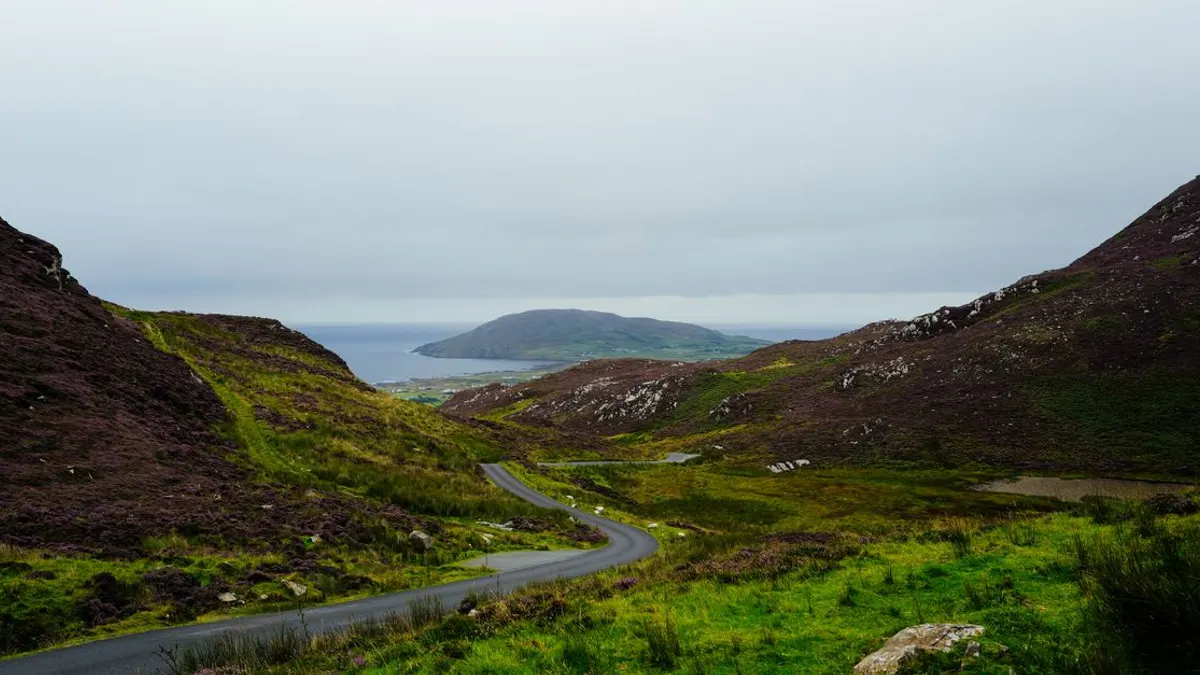
West Coast of Ireland Itinerary
The west coast of Ireland itinerary is one of the most rewarding drives in Europe — raw Atlantic cliffs, empty beaches, peat-smelling bogs, and towns where traditional music spills out of pubs on a Tuesday night. This route runs roughly 1,000 km from Donegal in the north to the Dingle Peninsula in the south, and it rewards slow travellers above all others.
This guide breaks the journey into manageable sections, names the stops that genuinely deserve your time, and links to accommodation options at every stage so you can plan without guessing.
Planning Your West Coast Ireland Itinerary: How Long Do You Need?
Most people allow 7 to 10 days for the full west coast. A 7-day Ireland itinerary is achievable if you skip a few detours, but 10 days gives you breathing room for weather delays, spontaneous pub stops, and a day on the Aran Islands. If you have two weeks, consider the 14-day Ireland itinerary which allows you to loop through inland highlights too.
A hire car is essential — public transport along the Wild Atlantic Way is sparse. See our driving in Ireland guide for tips on left-hand traffic, narrow roads, and speed limits before you collect your keys.
Stage 1 — Donegal: Where the Route Begins
Start in Donegal Town and allow at least two nights in the county. The sea cliffs at Slieve League are three times the height of the Cliffs of Moher and far less crowded. Malin Head, Ireland’s most northerly point, is a 90-minute drive north and offers elemental Atlantic views. Bundoran, further south, has long stretches of surf beach and a good spread of guesthouses.
Accommodation is varied across the county — from remote self-catering cottages on the Inishowen Peninsula to comfortable B&Bs in the town itself. Browse options at Donegal accommodation.
Stage 2 — Sligo and Connemara: The Wild Middle Section
Drop south from Donegal through Sligo, where Yeats country meets surf culture. Strandhill beach is worth a morning stop; the town has a compact food scene that punches above its weight.
From Sligo, the road south leads into Connemara — arguably the most visually dramatic stretch of the entire west coast. Clifden is the regional hub, with independent restaurants and a useful base for exploring the Sky Road coastal loop. Further inland, Kylemore Abbey sits beside its lake in a setting that looks almost theatrical.
Connemara accommodation ranges from working farm B&Bs to boutique lodges in converted stone buildings. If you want the sea on your doorstep, Clifden has several well-placed options.
Stage 3 — Galway City: Rest and Restock
Galway is the natural halfway point and deserves at least one full day. The city is compact enough to explore on foot: the Latin Quarter, the Claddagh, and the Spanish Arch are all within easy walking distance of each other. The Saturday market behind St Nicholas’s Church is one of the best in the country.
Galway also has the widest range of accommodation on the west coast — from city-centre boutique hotels to budget hostels. It is also the departure point for ferries to the Aran Islands if you want to add an island night to your itinerary.
Find the full range at where to stay in Galway.
We may earn a commission from bookings, at no extra cost to you.
Stage 4 — County Clare: Cliffs, Burren, and Traditional Music
Cross the Shannon via Killimer–Tarbert ferry (saves 90 km of driving) into County Clare. The Cliffs of Moher are the headline act — arrive early or late in the day to avoid the busiest periods. The coastal path north of the visitor centre gives the most dramatic vantage points.
The Burren is the quieter discovery: a limestone plateau scattered with rare wildflowers, ancient tombs, and small roads that reward aimless exploration. Doolin is the village most associated with traditional music sessions.
County Clare accommodation includes a good number of family cottages that work well as a base for two or three nights. The town of Ennis has more choice if you prefer a larger centre.
Stage 5 — County Kerry: The Ring of Kerry and Dingle
Kerry is where the west coast reaches its most celebrated form. The Ring of Kerry is a 179 km circuit around the Iveragh Peninsula, taking in mountain passes, coastal villages, and island views. Drive it anti-clockwise to avoid the tourist coaches, which travel the opposite direction by convention.
Killarney is the main accommodation hub — lively, well-connected, and surrounded by national park. Kenmare is the quieter alternative: a small market town with excellent restaurants and direct access to the Ring.
The Dingle Peninsula is, for many visitors, the finest part of the entire route. The Slea Head Drive passes prehistoric beehive huts, dramatic sea stacks, and the village of Ventry before looping back through Dingle Town. Allow a full day and do not rush it.
For Kerry-specific stays, see county Kerry accommodation and cottages in Kerry for self-catering options.
What to Book in Advance
When to book: Demand on the west coast peaks between June and August, and popular properties in Dingle, Clifden, and Doolin fill several months ahead. January to March is the quietest period — rates are lower, crowds are minimal, and the light on the cliffs is extraordinary. If you are travelling in July or August, secure your accommodation before you finalise your transport.
For practical pre-trip planning, see getting to Ireland and our travel insurance and car hire guide.
FAQ
Q: How do I get between stops on the west coast without a car? Bus Éireann operates routes connecting Galway, Westport, Sligo, and Limerick, with less frequent services to smaller villages. However, reaching the Cliffs of Moher, Slea Head, or Slieve League independently by public transport requires careful planning and often a guided day-tour. A hire car is strongly recommended if you want flexibility.
Q: Is the Wild Atlantic Way suitable for motorhomes? Much of it is, though some sections — particularly Slea Head Drive and parts of Connemara — involve single-track roads with passing places. Larger motorhomes should check road width restrictions before committing to those sections. Dedicated motorhome parks exist at most major stops along the route. See Wild Atlantic Way accommodation for suitable bases.
Q: What is the best base for exploring County Clare? Doolin is the most atmospheric choice — it sits close to the Cliffs of Moher and has a genuine traditional music scene. Ennis suits those who want a larger town with more restaurant choice and better transport links. The county Clare accommodation page lists options across the county.
Related: Wild Atlantic Way accommodation · Driving in Ireland · 10-day Ireland itinerary