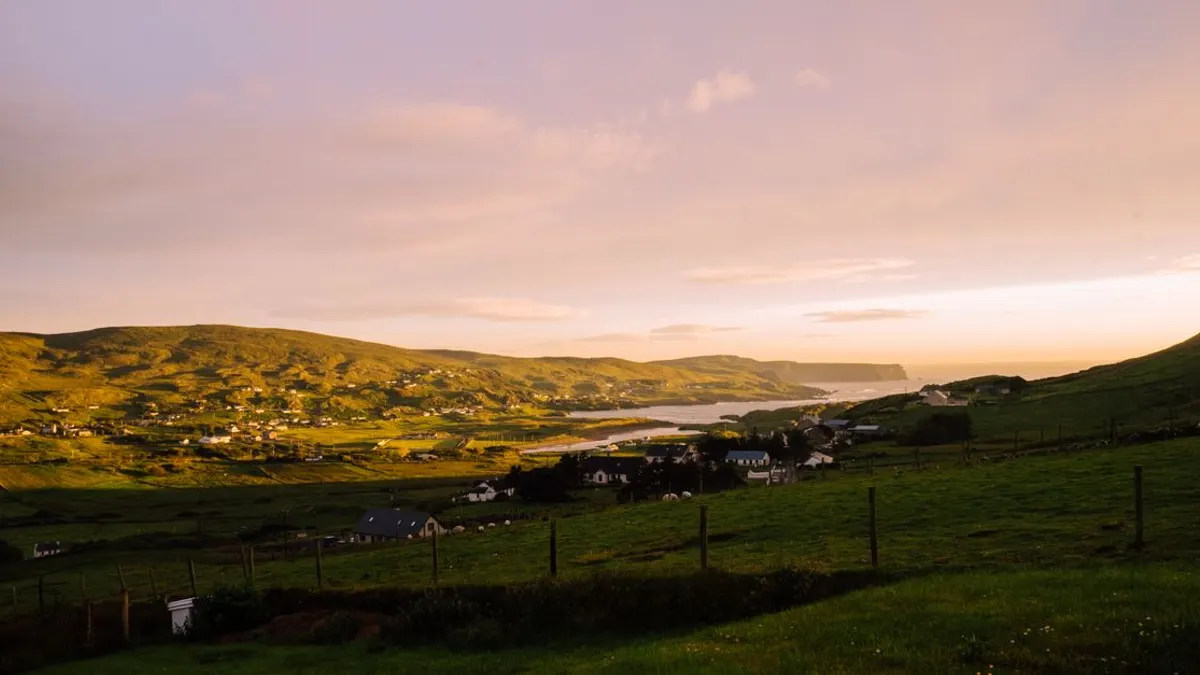
Donegal Accommodation: The Wild North-West
County Donegal is the Ireland that refuses to be tamed. Sheer sea cliffs, deserted beaches, bog-land that glows amber in autumn, and a coastline so fractured it could swallow several smaller counties whole. Choosing the right Donegal accommodation means positioning yourself well — distances here are long, roads are narrow, and the best scenery rewards those who sleep close to it.
Why Donegal Stands Apart
Donegal is the most northerly county in the Republic of Ireland, yet it wraps around three sides of Northern Ireland, giving it an almost island-like isolation. That distance from Dublin — three to four hours by car — keeps crowds thin even in summer. The county forms a long stretch of the Wild Atlantic Way, sharing the same storm-sculpted drama as Connemara and County Mayo, but with fewer tour buses and more breathing room.
Where to Base Yourself
Donegal Town
The county town sits at the mouth of Donegal Bay and makes a practical central hub. It has a genuine working harbour, a well-preserved castle, and a reasonable spread of hotels, guesthouses and B&Bs within walking distance of restaurants and pubs. For visitors arriving by bus from Dublin or Sligo, it is the obvious first night. That said, Donegal Town itself is compact — most people use it as a launchpad rather than a destination in its own right.
Ardara and the Glenties
Head north-west into the Gaeltacht (Irish-speaking) heartland and the pace drops noticeably. Ardara is a small market town famous for tweed weaving, with a handful of family-run guesthouses and traditional pubs that host live sessions on weekend nights. The surrounding glens offer self-catering cottages — the kind with turf fires and mountain views that make it genuinely hard to leave. If you are after a quiet writing retreat or walking holiday, this pocket of Donegal repays the extra kilometres.
The Inishowen Peninsula
Inishowen is Donegal’s most northerly finger of land, pushing up between Lough Foyle and Lough Swilly to reach Malin Head — the most northerly point on the island of Ireland. Carndonagh and Buncrana are the main service towns, with B&Bs and small hotels scattered along the lough shores. The views across to the Sperrins in Northern Ireland and, on clear days, to Scotland, are genuinely startling.
Bundoran and the South Coast
At the opposite end of the county, Bundoran is Donegal’s most visited resort, popular with surfers and Irish families on summer breaks. It has the widest choice of budget hotels and hostels in the county, plus several holiday parks. The surf beach at Tullan Strand is walkable from the town centre. Bundoran is also the most straightforward entry point if you are driving up from Sligo along the N15.
Dunfanaghy and the North Coast
For sheer landscape payoff, the north coast between Dunfanaghy and Gortahork is hard to beat. Marble Hill Beach is one of the finest strands in Ireland, and Horn Head offers a clifftop walk with Atlantic views in every direction. Dunfanaghy village has a small but well-chosen selection of country hotels, guesthouses and holiday cottages. Book well ahead for July and August — this area fills quickly precisely because it is so beautiful and so contained.
Types of Accommodation in Donegal
Donegal suits self-catering holiday homes particularly well. The scattered geography and long driving distances mean having your own base — with a kitchen to pack a packed lunch from — makes practical sense. Cottages around Malin Head, Fanad Head and the Rosses are plentiful and can be excellent value outside peak season.
Bed and breakfasts remain the social backbone of rural accommodation here. A good Donegal B&B host will tell you which beach is sheltered from today’s wind direction, which pub has a session tonight, and whether the mountain road you are planning is passable after rain. That local intelligence is worth as much as the breakfast.
For glamping in Ireland, a handful of sites have appeared around Donegal Bay and near Glenveagh National Park, with yurts and shepherd’s huts that put you squarely inside the landscape.
Getting Around Donegal
Donegal has very limited public transport outside the main towns. A hire car is not optional — it is the only way to reach the most rewarding parts of the county. The roads across the north and west are single-track in places, particularly around the Bluestack Mountains and the Rosses. Take your time; the roads are part of the experience. For planning the full journey from home, see our guide to getting to Ireland.
If you are combining Donegal with a broader north-west loop, it pairs naturally with Sligo to the south and the Causeway Coast to the east via the A2.
When to Book
Donegal accommodation is genuinely seasonal. July and August bring the bulk of visitors — Irish domestic tourism and a steady stream of diaspora travellers in particular. Coastal cottages and the better-known guesthouses near Horn Head, Malin Head and Fanad Head are frequently booked out by February for the following summer. If you are planning a July or August trip, search in January or February. Shoulder season — May, June and September — offers better availability, lower prices and, frankly, softer light that flatters the landscape.
FAQ
What is the best area to stay in Donegal for scenic walks? The north coast around Dunfanaghy, Horn Head and Fanad Head is the most rewarding base for walkers, combining sea-cliff paths, dune systems and quiet country roads. Glenveagh National Park, reachable in under an hour from most north Donegal bases, adds mountain terrain.
Is it easy to reach Donegal by public transport? Bus Éireann runs services between Dublin, Sligo and Donegal Town, but onward connections to rural areas are infrequent. Once in the county, a hire car is strongly recommended for anything beyond the main towns.
When is Donegal quietest? October through April sees visitor numbers drop significantly and many smaller guesthouses close for the winter. Late September and early October can be a sweet spot — roads are quiet, the bog colours are extraordinary, and a good number of businesses remain open.
Related: Where to Stay in Ireland · Accommodation on the Wild Atlantic Way · Where to Stay in Connemara