Visiting the Giant’s Causeway
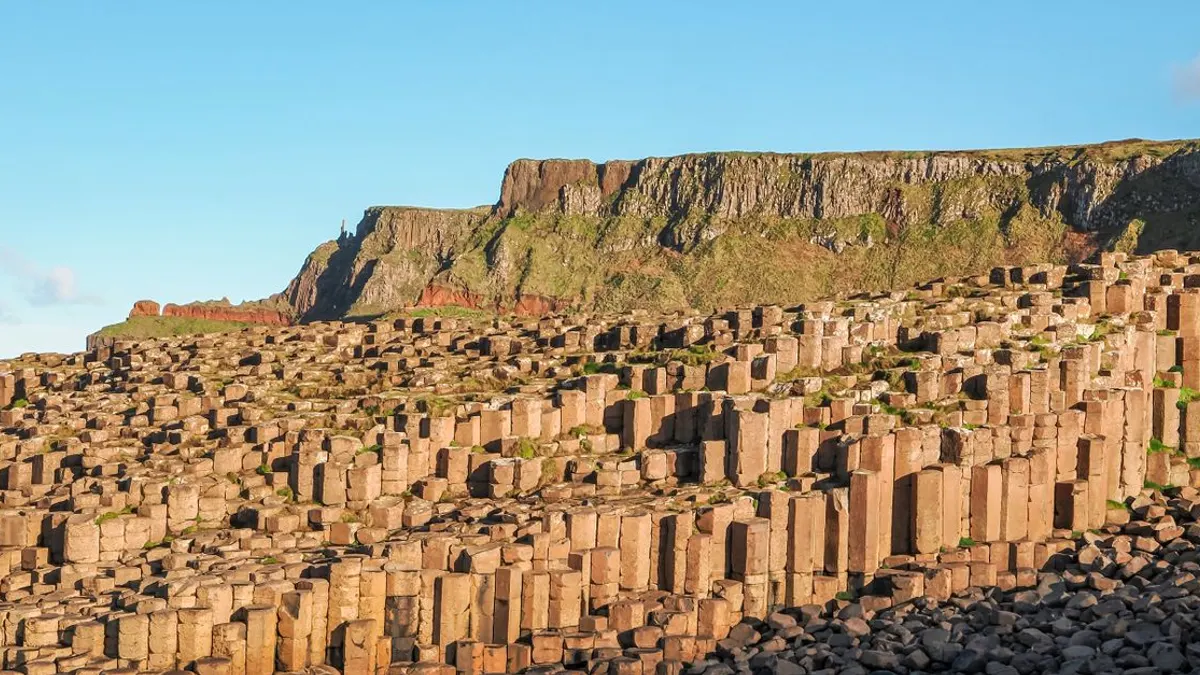
The Giant’s Causeway is unlike anything else on the island of Ireland. Around 40,000 interlocking basalt columns, formed by volcanic eruptions roughly 60 million years ago, fan out into the North Atlantic along the Antrim coast — and the effect is genuinely arresting, even if you have seen every photograph beforehand. UNESCO awarded it World Heritage status in 1986, and it remains Northern Ireland’s single most visited natural attraction.
What You Are Actually Looking At
The columns are the result of ancient lava flows cooling and contracting. As the molten rock shrank, it cracked into the hexagonal (and occasionally pentagonal or octagonal) shapes that now carpet the foreshore. The tallest columns, found in a formation known as the Organ, reach around 12 metres. At the shoreline the rock pools between the columns fill with seawater and attract wading birds, adding a layer of life to what might otherwise feel like a purely geological spectacle.
The site is managed by the National Trust, which operates a visitor centre set back from the shore. Entry to the causeway itself is free; you pay if you use the visitor centre or the audioguide.
Getting There
The Giant’s Causeway sits about 3 km north of the village of Bushmills, on the B146. The nearest sizeable town is Ballycastle (roughly 20 km east) and Coleraine (20 km south-west) has the nearest railway station. A seasonal open-top bus — the Causeway Rambler — runs from Coleraine via Bushmills during summer months, connecting to the Ulsterbus network.
Most visitors come by car, which also lets you string the causeway into a broader drive along the Causeway Coast. If you are basing yourself in the city, Belfast is around 90 minutes by road, making a day trip entirely feasible — though an overnight on the coast rewards you with far more time at the site before and after the coach-party crowds.
There is also a narrow-gauge railway — the Giant’s Causeway and Bushmills Railway — that runs seasonally from Bushmills to the visitor centre, a pleasant 2 km trundle through the coastal fields.
Walking the Site
A tarmac path descends from the visitor centre to the main causeway platform, and from there several marked trails branch out along the cliff tops and foreshore. The Shepherd’s Steps, a steep staircase cut into the basalt, lead up to panoramic views across the bay. The Benbane Head trail extends further east and, outside peak season, you can walk for a kilometre without meeting another soul.
Allow at least two hours if you want to reach the Organ formation and return via the cliff path. Wear shoes with grip — the columns are smooth and can be slippery when wet, which in Antrim is most of the time.
What to Bring
- Waterproof jacket: the weather here changes quickly
- Packed lunch: the visitor centre café is often busy; eating on the rocks is better anyway
- Binoculars: fulmars and razorbills nest on the cliffs in summer
Where to Stay Nearby
Bushmills itself has a handful of guesthouses and the landmark Bushmills Inn, a coaching-inn conversion with open fires and a whiskey bar that makes a natural end to an afternoon on the coast. The village also contains the Old Bushmills Distillery, the world’s oldest licensed whiskey distillery (1608), which runs tours daily.
For a wider choice of accommodation — from coastal B&Bs to self-catering cottages overlooking the sea — see our dedicated guide to staying on the Causeway Coast. If you are travelling as a family or with a group, a self-catering property in the area gives you the flexibility to come and go at the causeway outside peak visitor hours.
Combining It with the Wider North Antrim Coast
The causeway is the centrepiece of a stretch of coast that has several other worthwhile stops within a short drive:
- Dunluce Castle (3 km west): a medieval ruin perched on basalt cliffs, partially suspended over the sea
- Carrick-a-Rede rope bridge (8 km east): a 20-metre rope bridge to a small island used historically by salmon fishermen — book timed entry in advance in summer
- Ballintoy Harbour (6 km east): a small fishing harbour that will be familiar to fans of a certain television series filmed on the Antrim coast
Together these form a sensible half-day loop, or a full day if you linger. The Things to Do in Ireland section of this site has itinerary ideas that combine the causeway with sites further afield, including Irish castles worth visiting across the island.
Practical Tips
- Arrival time: aim to be at the causeway before 9 am or after 4 pm to avoid the peak coach-tour window (roughly 10 am–3 pm in summer)
- Photography: the best light on the columns tends to be early morning or the hour before sunset, when long shadows emphasise the geometry
- Parking: the National Trust car park at the visitor centre charges a fee; there is limited free street parking in Bushmills if you are willing to walk
When to Book
Demand for accommodation on the Causeway Coast peaks sharply from late June through August. If you are planning a summer visit, securing a room in Bushmills or Ballycastle from January onwards is not overcautious — the better-regarded B&Bs and cottages sell out months in advance. Shoulder seasons (April–May and September–October) offer quieter crowds and often lower room rates, and the causeway itself is atmospheric in autumn mist.
FAQ
Is entry to the Giant’s Causeway free? Access to the causeway and coastal path is free at all times. The National Trust charges for parking at its visitor centre, and there is a separate fee for the visitor centre exhibitions and audioguide.
How long does a visit to the Giant’s Causeway take? A quick walk to the main causeway platform and back takes about 45 minutes. If you follow the cliff-top trails to Benbane Head or spend time exploring the rock pools and formations, plan for two to three hours.
Can you visit the Giant’s Causeway without a car? Yes, though it requires a little planning. The seasonal Causeway Rambler bus connects Coleraine station to the site via Bushmills, and the narrow-gauge Bushmills Railway runs from the village to the visitor centre. Outside summer, public transport options are limited, so renting a car gives the most flexibility.
Related: Where to Stay on the Causeway Coast · Where to Stay in Belfast · Things to Do in Ireland