Visiting Skellig Michael
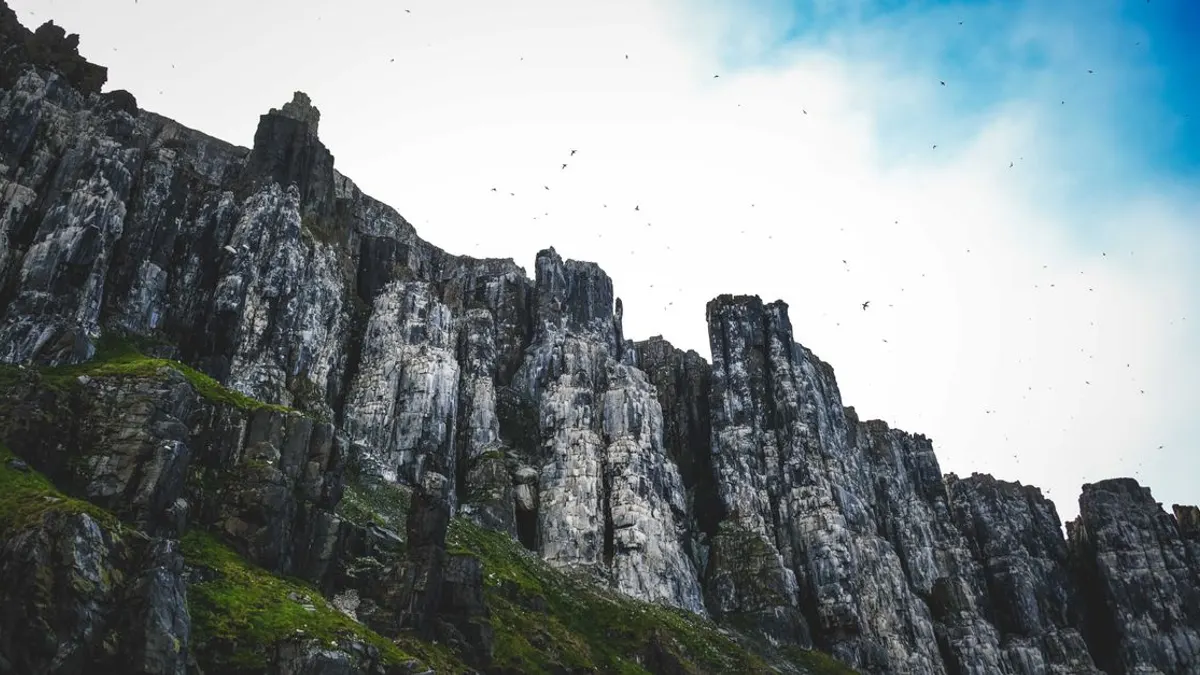
Rising from the Atlantic Ocean like a pair of stone daggers, Skellig Michael is one of Ireland’s most extraordinary places — and one of its most demanding to visit. A UNESCO World Heritage Site perched 12 kilometres off the tip of the County Kerry coast, this twin-pinnacled island shelters a remarkably intact 6th-century monastic settlement that monks somehow clung to for over 600 years. If you are looking for a travel experience that genuinely leaves you altered, Skellig Michael is it.
What Is Skellig Michael?
Skellig Michael (in Irish, Sceilig Mhichíl — “Michael’s Rock”) is the larger of the two Skellig islands. Its companion, Little Skellig, is a gannet colony and cannot be landed on. The island rises to 218 metres at its highest point and is home to a monastic enclosure of dry-stone beehive huts (clochán), two oratories, and a number of early Christian crosses — all built without mortar and yet still standing.
The site gained a new wave of admirers when it was used as the filming location for the final scenes of Star Wars: The Force Awakens (2015) and further sequences in The Last Jedi. However the monks who hauled stone up those vertical faces centuries before Hollywood arrived deserve equal credit for the spectacle.
How to Get to Skellig Michael
The island is reached by small licensed boat from one of three departure points on the Kerry coast: Portmagee, Ballinskelligs, and Cahirciveen. The crossing takes roughly 45 minutes from Portmagee, longer from Ballinskelligs. Seas on this stretch of the Atlantic can be rough — even in summer — and departures are frequently cancelled due to weather. This is not an exaggeration: build in a buffer day.
Boats are licensed by the Office of Public Works (OPW), which manages the site. Each boat carries a maximum of 12 passengers, and the total daily landing quota is strictly capped (currently around 180 visitors per day). This makes advance booking absolutely essential — popular departure slots in June and July often sell out weeks or months ahead.
To reach the departure ports, a car is by far the easiest option. Read our driving in Ireland guide before you go — Kerry roads are narrow and scenic but can be slow. Killarney and Kenmare make excellent bases; see where to stay in Killarney and where to stay in Kenmare for accommodation options close to the embarkation points.
The Climb: 618 Steps and What Awaits at the Top
Landing on Skellig Michael is only the beginning. From the stone pier, the path climbs via 618 uneven, steep, and at times exposed stone steps to reach the monastic plateau at roughly 180 metres. There are no handrails along significant sections. The ascent takes most visitors between 30 and 50 minutes depending on fitness, and the descent demands equal concentration.
At the summit, the monastery unfolds across a saddle of rock: six beehive huts, two boat-shaped oratories, the remains of a church dedicated to St Michael, and carved stone crosses. The scale is intimate, the wind is rarely absent, and the views across to Little Skellig — carpeted white with 70,000 gannets — are extraordinary. Guides are present on the island and provide context that turns a scramble into an education.
Do not attempt the climb in wet conditions if you are not confident on uneven terrain. Wear sturdy footwear, bring waterproofs, and carry food and water — there are no facilities whatsoever on the island.
Best Time to Visit Skellig Michael
The island is open to visitors from May to early October only. Outside these months, landing is not permitted and boats do not run. The calmest weather and longest days fall in June and July, but these are also the busiest months. May and September offer better availability and a quieter experience, though sea conditions are less predictable.
When to book: Demand for licensed boat trips peaks from January onwards as summer slots fill quickly. If your travel dates are fixed, book your boat trip at the same time you book your flights and accommodation. See our best time to visit Ireland guide for broader seasonal advice.
Where to Stay Near Skellig Michael
There is no accommodation on the island itself; the nearest bases are Portmagee (a small harbour village with guesthouses and a pub) and Waterville, a slightly larger resort town 15 kilometres south. Both sit on the Ring of Kerry loop road, so combining the Skelligs with a wider Kerry drive is straightforward.
For a broader choice of hotels, B&Bs, and self-catering options, Killarney (about 75 km by road from Portmagee) is the main hub in the county. Alternatively, the Dingle Peninsula to the north offers a quieter atmosphere and accommodation in Dingle town within easy reach of the Kerry coast.
Browse County Kerry accommodation or use the map below to find availability near your departure point.
We may earn a commission from bookings made through our links, at no extra cost to you.
Combining Skellig Michael with a Wider Kerry Itinerary
A trip to Skellig Michael fits naturally into a longer west-coast road trip. From Kerry you can head north along the Wild Atlantic Way through Clare and Galway, or loop through the Beara Peninsula before crossing into Cork. Our 7-day Ireland itinerary and west coast itinerary both include a Kerry segment that can be built around a Skellig day.
Do not overlook travel insurance for a trip like this — weather-related cancellations are common and a policy that covers activity disruption is worth having. Car hire is practically a necessity for exploring this part of Kerry; the same guide covers both.
Practical Information at a Glance
- Season: May to early October
- Departure ports: Portmagee (most common), Ballinskelligs, Cahirciveen
- Crossing time: ~45 minutes each way from Portmagee
- Time on island: Typically 2–2.5 hours
- Steps: 618 (no handrails on many sections)
- Facilities on island: None (no toilets, no café, no shelter)
- What to bring: Sturdy shoes, waterproofs, water, food, fully charged phone
- Booking: Via licensed boat operators — book as early as possible
FAQ
Can anyone visit Skellig Michael? The climb involves 618 steep, uneven stone steps with no handrails on large sections. It is not suitable for people with significant mobility difficulties, vertigo, or young children. There is no minimum age set by the OPW, but parents should assess the climb carefully. The boat crossing itself can also be rough; those who are prone to seasickness should take precautions.
Is Skellig Michael worth the cost? Boat trips typically cost in the region of €80–€120 per adult depending on the operator and departure point. Given the strict landing quota, the uniqueness of the site, and the logistical effort involved, most visitors consider it outstanding value. It is genuinely unlike anything else in Ireland — or Europe.
What happens if my trip is cancelled due to weather? Most operators will rebook you on the next available slot or issue a full refund. Weather cancellations are common, particularly in May and September. Always build a buffer day into your itinerary if Skellig Michael is a priority, and consider travel insurance that covers activity cancellations.
Related: